414 sidor
På English
Publicerades 1 januari 2007
414 sidor
På English
Publicerades 1 januari 2007
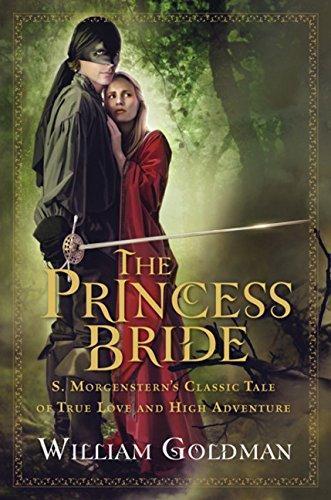
The Princess Bride is a timeless tale that pits country against country, good against evil, love against hate. This incredible journey and artfully rendered love story is peppered with strange beasties monstrous and gentle, memorable surprises both terrible and sublime, and such unforgettable characters as...
Westley, the handsome farm boy who risks death (and much worse) for the woman he loves; Inigo, the Spanish swordsman who lives only to avenge his father's death; Fezzik, the gentlest giant ever to have uprooted a tree with his bear hands; Vizzini, the evil Sicilian, with a mind so keen he's foiled by his own perfect logic; Prince Humperdinck, the eviler ruler of Guilder, who has an equally insatiable thirst for war and beauteous Buttercup; Count Rugen, the evilest man of all, who thrives on the excruciating pain of others; Miracle Max, the King's ex-Miracle Man, …
The Princess Bride is a timeless tale that pits country against country, good against evil, love against hate. This incredible journey and artfully rendered love story is peppered with strange beasties monstrous and gentle, memorable surprises both terrible and sublime, and such unforgettable characters as...
Westley, the handsome farm boy who risks death (and much worse) for the woman he loves; Inigo, the Spanish swordsman who lives only to avenge his father's death; Fezzik, the gentlest giant ever to have uprooted a tree with his bear hands; Vizzini, the evil Sicilian, with a mind so keen he's foiled by his own perfect logic; Prince Humperdinck, the eviler ruler of Guilder, who has an equally insatiable thirst for war and beauteous Buttercup; Count Rugen, the evilest man of all, who thrives on the excruciating pain of others; Miracle Max, the King's ex-Miracle Man, who can raise the dead (kind of); and, of course, Buttercup... the princess bride, the most perfect, beautiful woman in the history of the world!
So yeah, I pretty much loved this.
I've loved the movie for a long time, of course. And the book is very faithful to... I mean the other way around. Sure, there are some slight differences in the actual story; Westley is a little more of an anti-hero (I could never buy that the movie's Westley was really [spoiler]a pillaging, murderous pirate[/spoiler]; I can just about buy it about the novel's version), there's some extra backstory, one or two extra scenes... but on a whole, it's the exact same story, even the exact same dialogue (though Goldman's characters tend to take their own story slightly more seriously than Reiner's). Apart from that, though, the only major change is the framing device; instead of having a kindly old grandfather tell it to his grandson, it's "William Goldman" telling us the story his father (barely literate in English) told him. And that's …
So yeah, I pretty much loved this.
I've loved the movie for a long time, of course. And the book is very faithful to... I mean the other way around. Sure, there are some slight differences in the actual story; Westley is a little more of an anti-hero (I could never buy that the movie's Westley was really [spoiler]a pillaging, murderous pirate[/spoiler]; I can just about buy it about the novel's version), there's some extra backstory, one or two extra scenes... but on a whole, it's the exact same story, even the exact same dialogue (though Goldman's characters tend to take their own story slightly more seriously than Reiner's). Apart from that, though, the only major change is the framing device; instead of having a kindly old grandfather tell it to his grandson, it's "William Goldman" telling us the story his father (barely literate in English) told him. And that's a pretty big change.
Fantasy Moon said that after a while she started skipping "Goldman's" commentary on "Morgenstern's" story (as opposed to Goldman's invention of both "Goldman" and "Morgenstern" to tell his own story). And I can understand that, because it does interfere a bit with the pure sugar rush of the wonderfully naive adventure story. On the other hand, I'm not sure those comments aren't the actual story. I mean, we have at least four storytellers here: there's "S. Morgenstern", who supposedly wrote the original book, the one full of weird anachronisms and chapter upon chapter of social satire of a system where Westley and Buttercup are really only footnotes. Then there's "Goldman Sr.", the immigrant father from the same country as "Morgenstern", who told parts of the story to his young son Billy (who wasn't entirely well at the time, either). There's "William Goldman", the (slightly unlikable) Hollywood scriptwriter who wrote the same movies that the real William Goldman wrote, who rewrote "Morgenstern's" novel to fit with his father's version and turn it into a proper fairytale that his (disappointing) son might like; and then there's the actual William Goldman who invented the whole lot of them.
You can read only the "Morgenstern" bits, and you wind up with a very fun fairytale. I do think, though, there's a point to the "Goldman" intrusions; he breaks the fourth wall and comments on his own version of the story, making sure we know that the story is exactly that - a story. One which has been heavily doctored and simplified (by a celebrated Hollywood screenwriter who, by his own admission, likes his scripts better than his family and is unable to feel the sort of True Love the story is supposedly about). It's not a huge change to the main story, and I'm not sure if it makes it one I like better than I did before, but it does add another few layers to the story.
One of the William Goldmans said:
Life is pain. Anyone that says different is selling something.
But the story sold quite well, didn't it?
I will say, though, that I thought the ending is a little too sudden. I like the ending, I probably like it better than the one in the movie, but it does feel a bit like... one of the narrators, I have no clue which, ran out of paper and had to finish quickly. That's half a star gone there, I think.
And as always, XKCD has the scoop.