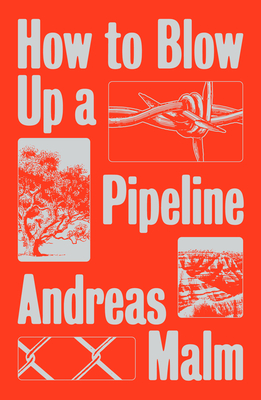
Why resisting climate change means combatting the fossil fuel industry
The science on climate change has been clear for a very long time now. Yet despite decades of appeals, mass street protests, petition campaigns, and peaceful demonstrations, we are still facing a booming fossil fuel industry, rising seas, rising emission levels, and a rising temperature. With the stakes so high, why haven’t we moved beyond peaceful protest?
In this lyrical manifesto, noted climate scholar (and saboteur of SUV tires and coal mines) Andreas Malm makes an impassioned call for the climate movement to escalate its tactics in the face of ecological collapse. We need, he argues, to force fossil fuel extraction to stop—with our actions, with our bodies, and by defusing and destroying its tools. We need, in short, to start blowing up some oil pipelines.
Offering a counter-history of how mass popular change has occurred, from …
Why resisting climate change means combatting the fossil fuel industry
The science on climate change has been clear for a very long time now. Yet despite decades of appeals, mass street protests, petition campaigns, and peaceful demonstrations, we are still facing a booming fossil fuel industry, rising seas, rising emission levels, and a rising temperature. With the stakes so high, why haven’t we moved beyond peaceful protest?
In this lyrical manifesto, noted climate scholar (and saboteur of SUV tires and coal mines) Andreas Malm makes an impassioned call for the climate movement to escalate its tactics in the face of ecological collapse. We need, he argues, to force fossil fuel extraction to stop—with our actions, with our bodies, and by defusing and destroying its tools. We need, in short, to start blowing up some oil pipelines.
Offering a counter-history of how mass popular change has occurred, from the democratic revolutions overthrowing dictators to the movement against apartheid and for women’s suffrage, Malm argues that the strategic acceptance of property destruction and violence has been the only route for revolutionary change. In a braided narrative that moves from the forests of Germany and the streets of London to the deserts of Iraq, Malm offers us an incisive discussion of the politics and ethics of pacifism and violence, democracy and social change, strategy and tactics, and a movement compelled by both the heart and the mind. Here is how we fight in a world on fire.
What this book is not - a field guide for industrial sabotage.
What it is - a well-reasoned argument in favor of a radical flank of the climate movement.
I found it surprisingly hopeful, in a good way, with his skillful takedown of deep ecology and climate fatalism. I come away feeling reinvigorated that a mass movement with a broad diversity of tactics is still capable of making humanity change our ways fast enough to avert catastrophe.
Firstly, this book is really good at what it sets out to do, mainly explain when and why property destruction can be adopted as a tactic for environmental preservation, and avoiding climate despair. For the most part, I agree with other criticisms of it listed here, namely that the title is misleading as it gives no instructions on practically how to blow up a pipeline, and does neglect care work and support infrastructure in doing revolution. However, I don't think that these are massive strikes against it, as it's not trying to be the What is to be Done of the 21st century. It's merely trying to advocate that property destruction is a legitimate tactic at this point in the climate crisis, and I think it does that well. While it is certainly preferable to abolish the state rather than pressure it into passing anemic climate legislation, these tactics, as …
Firstly, this book is really good at what it sets out to do, mainly explain when and why property destruction can be adopted as a tactic for environmental preservation, and avoiding climate despair. For the most part, I agree with other criticisms of it listed here, namely that the title is misleading as it gives no instructions on practically how to blow up a pipeline, and does neglect care work and support infrastructure in doing revolution. However, I don't think that these are massive strikes against it, as it's not trying to be the What is to be Done of the 21st century. It's merely trying to advocate that property destruction is a legitimate tactic at this point in the climate crisis, and I think it does that well. While it is certainly preferable to abolish the state rather than pressure it into passing anemic climate legislation, these tactics, as Malm notes can also be used as tools of liberation against the state itself, and not just the parts of state that are destroying the planet.