« Nous dressons nos campements de solutions durables. Nous manifestons, nous bloquons, nous adressons des listes de revendications à des ministres, nous nous enchaînons aux grilles, nous nous collons au bitume, nous manifestons à nouveau le lendemain. Nous sommes toujours parfaitement, impeccablement pacifiques. Nous sommes plus nombreux, incomparablement plus nombreux. Il y a maintenant un ton de désespoir dans nos voix ; nous parlons d’extinction et d’avenir annulé. Et pourtant, les affaires continuent tout à fait comme avant – business as usual. À quel moment nous déciderons-nous à passer au stade supérieur ? »
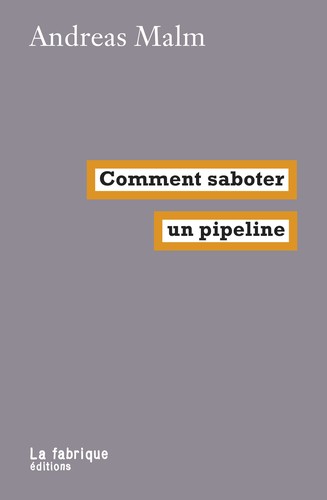
Confrontant l’histoire des luttes passées à l’immense défi du réchauffement climatique, Andreas Malm interroge un précepte tenace du mouvement pour le climat : la non-violence et le respect de la propriété privée. Contre lui, il rappelle que les combats des suffragettes ou pour les droits civiques n’ont pas …
Traduit de l'anglais par Étienne Dobenesque
« Nous dressons nos campements de solutions durables. Nous manifestons, nous bloquons, nous adressons des listes de revendications à des ministres, nous nous enchaînons aux grilles, nous nous collons au bitume, nous manifestons à nouveau le lendemain. Nous sommes toujours parfaitement, impeccablement pacifiques. Nous sommes plus nombreux, incomparablement plus nombreux. Il y a maintenant un ton de désespoir dans nos voix ; nous parlons d’extinction et d’avenir annulé. Et pourtant, les affaires continuent tout à fait comme avant – business as usual. À quel moment nous déciderons-nous à passer au stade supérieur ? »
Confrontant l’histoire des luttes passées à l’immense défi du réchauffement climatique, Andreas Malm interroge un précepte tenace du mouvement pour le climat : la non-violence et le respect de la propriété privée. Contre lui, il rappelle que les combats des suffragettes ou pour les droits civiques n’ont pas été gagnés sans perte ni fracas, et ravive une longue tradition de sabotage des infrastructures fossiles. La violence comporte des périls, mais le statu quo nous condamne. Nous devons apprendre à lutter dans un monde en feu.
What this book is not - a field guide for industrial sabotage.
What it is - a well-reasoned argument in favor of a radical flank of the climate movement.
I found it surprisingly hopeful, in a good way, with his skillful takedown of deep ecology and climate fatalism. I come away feeling reinvigorated that a mass movement with a broad diversity of tactics is still capable of making humanity change our ways fast enough to avert catastrophe.
Firstly, this book is really good at what it sets out to do, mainly explain when and why property destruction can be adopted as a tactic for environmental preservation, and avoiding climate despair. For the most part, I agree with other criticisms of it listed here, namely that the title is misleading as it gives no instructions on practically how to blow up a pipeline, and does neglect care work and support infrastructure in doing revolution. However, I don't think that these are massive strikes against it, as it's not trying to be the What is to be Done of the 21st century. It's merely trying to advocate that property destruction is a legitimate tactic at this point in the climate crisis, and I think it does that well. While it is certainly preferable to abolish the state rather than pressure it into passing anemic climate legislation, these tactics, as …
Firstly, this book is really good at what it sets out to do, mainly explain when and why property destruction can be adopted as a tactic for environmental preservation, and avoiding climate despair. For the most part, I agree with other criticisms of it listed here, namely that the title is misleading as it gives no instructions on practically how to blow up a pipeline, and does neglect care work and support infrastructure in doing revolution. However, I don't think that these are massive strikes against it, as it's not trying to be the What is to be Done of the 21st century. It's merely trying to advocate that property destruction is a legitimate tactic at this point in the climate crisis, and I think it does that well. While it is certainly preferable to abolish the state rather than pressure it into passing anemic climate legislation, these tactics, as Malm notes can also be used as tools of liberation against the state itself, and not just the parts of state that are destroying the planet.