
Björn recenserade Solenoid av Mircea Cărtărescu
None
5 stjärnor
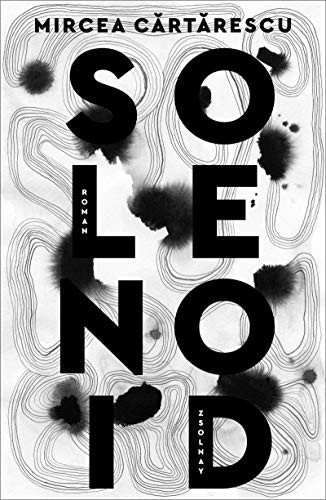
So I finished Solenoid on Sunday.
And it's... definitely what you'd expect of something that Cartarescu considers his masterpiece. He starts from a simple premise: What if the Narrator (who's never explicitly named but shares a birthday and a first work with MC) chickened out after his first poetry reading went disastrously wrong and never pursued a literary career, instead becoming an uninspired teacher at a junior high school on the other side of Bucarest? And also, what if Bucarest was part of some weird experiment by Tesla worshippers who had installed huge Tesla coils (there's the title) under select houses (including, it turns out, the narrator's own) all over Bucarest? Also, if there was a growing underground placard-waving protest movement asking, no, demanding an end to this ridiculous notion of death? Down with death! Down with aging! Down with sickness! Down with this unfair entrapment within flesh machines with …
So I finished Solenoid on Sunday.
And it's... definitely what you'd expect of something that Cartarescu considers his masterpiece. He starts from a simple premise: What if the Narrator (who's never explicitly named but shares a birthday and a first work with MC) chickened out after his first poetry reading went disastrously wrong and never pursued a literary career, instead becoming an uninspired teacher at a junior high school on the other side of Bucarest? And also, what if Bucarest was part of some weird experiment by Tesla worshippers who had installed huge Tesla coils (there's the title) under select houses (including, it turns out, the narrator's own) all over Bucarest? Also, if there was a growing underground placard-waving protest movement asking, no, demanding an end to this ridiculous notion of death? Down with death! Down with aging! Down with sickness! Down with this unfair entrapment within flesh machines with clearly defined spatial and temporal limits that we never had any say in designing! Democratize existence! You know that Bill Hicks gag, "If you're so pro-life, don't block abortion clinics - lock arms and block cemeteries." Cartarescu does just that and he makes it work.
Of course nothing's simple in Cartarescu's world, and yet it all feels so effortless, the way he builds this into a four-dimensional tesseract of a novel that makes Against The Day feel linear. He weaves together detailed realistic (if always entrancing) depictions of life under 1980s Ceacescu or in a 1960s TBC ward with pure science fiction, with surreal flights into the stratosphere or the microscopic alongside straightfaced biographies of authors, mathematicians and esoterics who somehow relate to his story, roping in Kafka and Tarkovsky and Mann and Verne and the Voynich manuscript etc, and doing it so seamlessly that you eventually stop trying to fit it all together and just ride the wave wherever he takes you. It's like watching the actual brush strokes of Jackson Pollock rather than the canvas the dead paint splatters on. I mean, he's so full of ideas, and moves so perfectly between them, that it makes just as much sense for him to wonder whether he really had a twin brother who died as an infant, as it does for him to be Fantastic Voyage-d into a mite Messiah so he can tell his fellow mites about the good will of the enormous person they live on.
What gets me is how easily all this could become just an exercise, just empty metaphor. But it never does. I've never been to Bucarest but I feel like I could navigate it from a Cartarescu novel - maybe not the real Bucarest, but it's there, just as real as the Lovecraftian exhibitions he finds under abandoned factories. The story is, in the end, grounded in so much love and anger and fear (he spends ten pages just writing help! help! help!) and humour and strength and imagination that it takes my breath away.
It's so messy and so broken and so horrific and so hopeful.