
RexLegendi recenserade Devil on the Cross av Ngugi wa Thiong’o
Kenyan classic
5 stjärnor
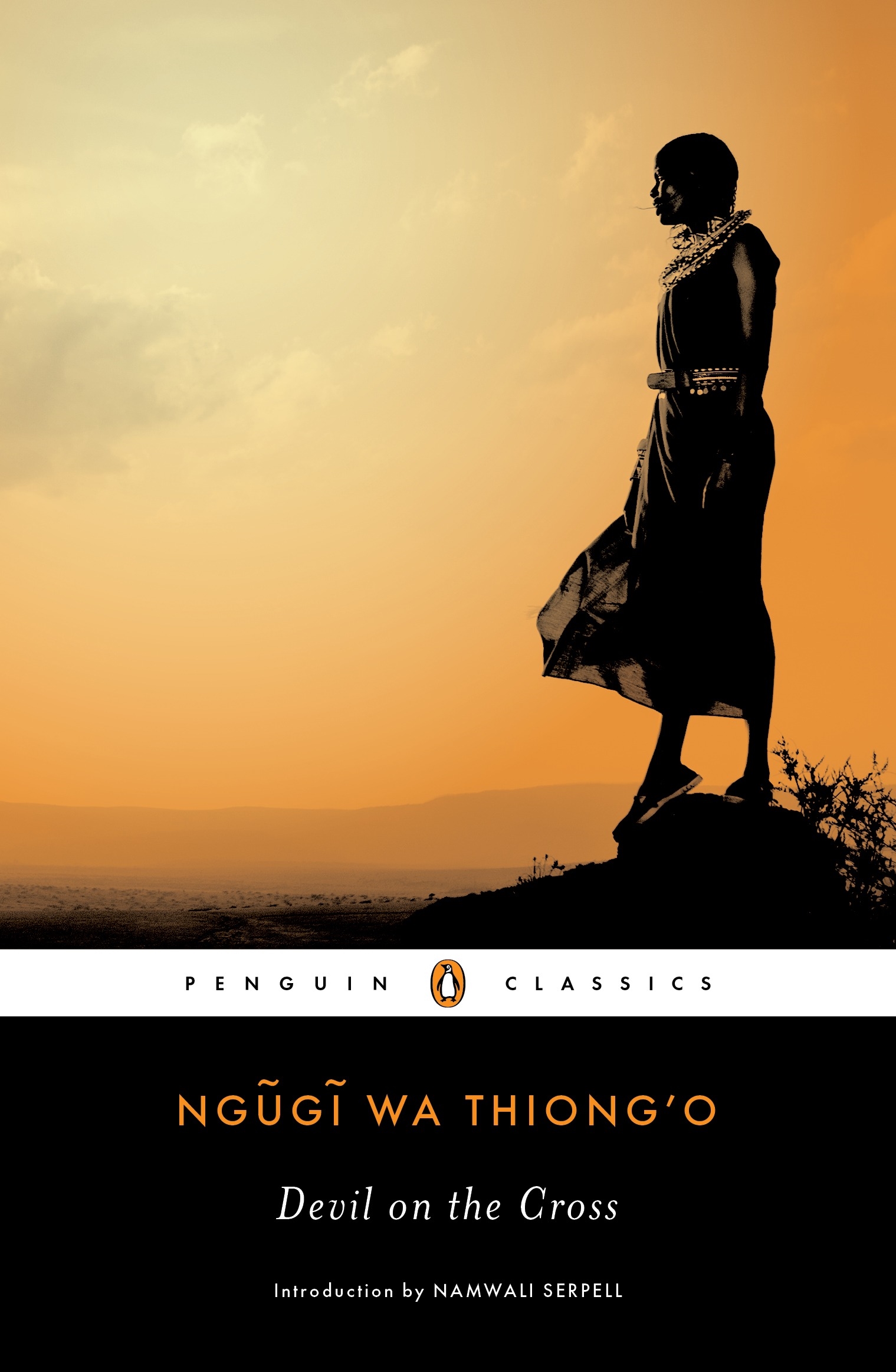
Devil on the Cross by Ngũgĩ wa Thiong’o (1938) is one of the most staggering novels I have read. While it reminded me of John Steinbeck’s social activism (In Dubious Battle), George Orwell’s dystopian world-building (1984), and Mikhail Bulgakov’s play with the devil (The Master and Margarita), it is first and foremost a thought-provoking reflection on postcolonial Kenyan society.
Certain people in Ilmorog, our Ilmorog, told me that this story was too disgraceful, too shameful, that it should be concealed in the depths of everlasting darkness. There were others who claimed that it was a matter for tears and sorrow, that it should be suppressed so that we should not shed tears a second time. I asked them: How can we cover up pits in our courtyard with leaves or grass, saying to ourselves that because our eyes cannot now see the holes, …
Devil on the Cross by Ngũgĩ wa Thiong’o (1938) is one of the most staggering novels I have read. While it reminded me of John Steinbeck’s social activism (In Dubious Battle), George Orwell’s dystopian world-building (1984), and Mikhail Bulgakov’s play with the devil (The Master and Margarita), it is first and foremost a thought-provoking reflection on postcolonial Kenyan society.
Certain people in Ilmorog, our Ilmorog, told me that this story was too disgraceful, too shameful, that it should be concealed in the depths of everlasting darkness. There were others who claimed that it was a matter for tears and sorrow, that it should be suppressed so that we should not shed tears a second time. I asked them: How can we cover up pits in our courtyard with leaves or grass, saying to ourselves that because our eyes cannot now see the holes, our children can prance about the yard as they like?
Written on toilet paper The novel’s background is as interesting as its content. It is regarded as the first modern novel written in Gĩgĩkũyũ, a language spoken in the area around Nairobi, after Wa Thiong’o decided to write in his native tongue. Since he was imprisoned due to a politically motivated theatre play, the author wrote the story on toilet paper. The main character is Warĩĩnga, a young woman traveling from the capital to her parents in Ilmorog. She shares a bus (matatũ) ride with five remarkable people, each with their own thoughts on the political state of their country. During the ride, their conversation shifts to a mysterious Devil’s Feast for Thieves and Robbers happening in Ilmorog. As it soon turns out, each of them has their own reason for joining the feast.
Kenyan key developments In less than 300 pages, Wa Thiong’o explores key developments in Kenya, from capitalist imperialism, corruption, and poverty to gender inequality and the loss of culture due to the continued dominance of European languages and values. I enjoyed the way the author integrates different forms of oppression into a thrilling (yet bizarre) narrative. Finally, his words are sharp and well-chosen. Novels like Devil on the Cross and Chinua Achebe’s Things Fall Apart make me realise that I must regularly reserve space for authors from the African continent.