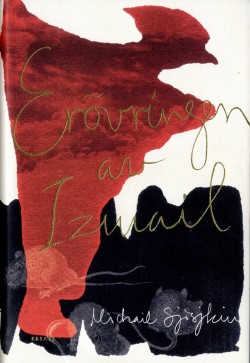

Björn recenserade Erövringen av Izmail av Olga Sedakova
None
5 stjärnor
Hear ye, hear ye, court is now in session, the honourable judge Mikhail Shishkin presiding.
Taking Izmail is a trial with a thousand witnesses, and it's not remotely fair, but then again neither is the crime... if indeed there is one. Shishkin, writing in exile from New Russia in 1998, puts the entirety of Russo-Soviet history, (self-)mythology, literature and society up there in both the witness booth and the bench of the accused. What is Russia after the fall of the Soviet Union? What was it? What stories does it tell about itself? What does it do to itself?
The witnesses are from two camps: existing literature and Shishkin's own. Large parts of the novel are basically a DJ Shadow-esque samplefest of literature from and about Russia - a sentence from the Nestorian chronicle, a name from Dostoevsky, a section from a party newspaper in 1929, bible bible bible, etc …
Hear ye, hear ye, court is now in session, the honourable judge Mikhail Shishkin presiding.
Taking Izmail is a trial with a thousand witnesses, and it's not remotely fair, but then again neither is the crime... if indeed there is one. Shishkin, writing in exile from New Russia in 1998, puts the entirety of Russo-Soviet history, (self-)mythology, literature and society up there in both the witness booth and the bench of the accused. What is Russia after the fall of the Soviet Union? What was it? What stories does it tell about itself? What does it do to itself?
The witnesses are from two camps: existing literature and Shishkin's own. Large parts of the novel are basically a DJ Shadow-esque samplefest of literature from and about Russia - a sentence from the Nestorian chronicle, a name from Dostoevsky, a section from a party newspaper in 1929, bible bible bible, etc etc etc, all living parts of the soul. (Brilliantly translated into Swedish, with each sample given era-appropriate language.) In between he puts in what at first seems to be short stories, occasionally starring a certain Misha and occasionally being something completely different; people trying to raise children in this, people trying to survive, trying to be what the world expects them to be, all of it so full of allusions, Joycean linguistics and details that it needs 30 pages of notes. And then gradually, over 444 pages, it all starts to gel until that heartbreaking finale.
It's not an easy novel to read. It takes me almost 100 pages before it starts to click what he's doing. But then he really starts to deliver. An exodus retelling where Pharaoh never lets the slaves go no matter how many plagues are visited upon everyone, page upon page of famous last words of people who thought they had more, stories of women who had to keep working while everything else was taken away, story after story after story of things that happened or are retellings of things that happened until it all becomes a choir and the choir finally becomes the single voice of a great author being born.