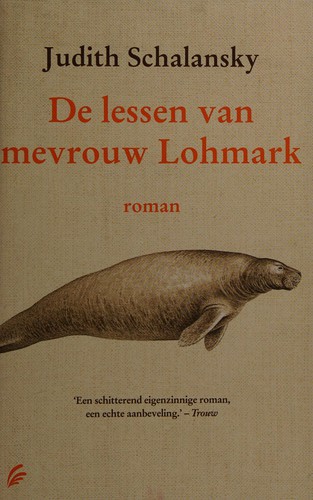
Björn recenserade Der Hals der Giraffe av Judith Schalansky
None
4 stjärnor
Like a cross between The Prime of Miss Jean Brodie and Stoner, set in reunited Germany. And that's the sort of soundbite that Inge Lohmark herself would most likely have had nothing but contempt for.
Frau Lohmark (she's very adamant about being on last-name terms with everyone, and cannot fathom how the younger teachers can let their students adress them by their first name) is a biology teacher in a dying town in the former GDR. Each year, she gets a new class (smaller each year, as more people move away and the ones who remain lose all motivation to study) of bored high schoolers whom she's expected to teach the basics of what should be a hard science; she's been doing this since the good old communist days, and while other teachers have had to change their entire syllabus to adapt to a new society, biology hasn't changed, …
Like a cross between The Prime of Miss Jean Brodie and Stoner, set in reunited Germany. And that's the sort of soundbite that Inge Lohmark herself would most likely have had nothing but contempt for.
Frau Lohmark (she's very adamant about being on last-name terms with everyone, and cannot fathom how the younger teachers can let their students adress them by their first name) is a biology teacher in a dying town in the former GDR. Each year, she gets a new class (smaller each year, as more people move away and the ones who remain lose all motivation to study) of bored high schoolers whom she's expected to teach the basics of what should be a hard science; she's been doing this since the good old communist days, and while other teachers have had to change their entire syllabus to adapt to a new society, biology hasn't changed, has it? Well, apart from people like Lysenko falling out of favour, the idea that improvement can be passed on from generation to generation, and so she clings even harder to the basics: genetics, evolution, survival of the fittest. She loathes her weak students, her daughter's moved to California and her husband has taken up ostrich farming... what else is she supposed to do but carry on, convince herself that nothing really changes but the buzzwords in the principal's motivational speeches?
Like with Atlas of Remote Islands, Schalansky plays a lot with the narration here, almost to Oulipoan levels. The book is only three chapters long, each covering one day in Frau Lohmark's life, but with each spread having a different heading - Infanticide, >Niches, Central Nervous System, Embryogenesis, etc etc - as she forces everything that she feels and remembers into a purely biological context, trying to explain everything with a Darwinian deus vult to keep from screaming. Not that she would. That sort of self-serving sentimentality is for those who still think words like "freedom" and "happiness" actually mean something. We fuck up because we're born that way, we foist responsibility onto the next generation, and then we blame them for not accepting it.
And yet, within all this, amid the closed-down factories and empty apartment buildings, the averted eyes, flashes of pure beauty and a longing that she almost allows herself to feel, itself perverted by the setting. Until she forces it down again.