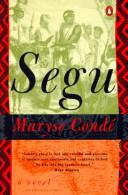

Björn recenserade Segu av Maryse Condé
None
3 stjärnor
3.5/5
As a work of historical fiction, Segu is often tremendous. Following one family over 70 years of history from the late 18th century to the mid-19th, right at the beginning of European colonialism in inner Africa (which, ironically, was partially driven by the official end of slavery), but from the POV of a family who are intimately involved with the intra-African politics of the time; the power struggle between various kingdoms, the spread of Islam and Christianity colonializing both minds and narratives long before the guns get there, the attempts to adjust the old way of life to new situations... All stuffed with endless details of what came before, of history repeating, of ideas evolving. It's the sort of novel that should really come with a bibliography and footnotes, not because I doubt her, but because I want to learn more.
I mentioned slavery, right? The novel keeps circling …
3.5/5
As a work of historical fiction, Segu is often tremendous. Following one family over 70 years of history from the late 18th century to the mid-19th, right at the beginning of European colonialism in inner Africa (which, ironically, was partially driven by the official end of slavery), but from the POV of a family who are intimately involved with the intra-African politics of the time; the power struggle between various kingdoms, the spread of Islam and Christianity colonializing both minds and narratives long before the guns get there, the attempts to adjust the old way of life to new situations... All stuffed with endless details of what came before, of history repeating, of ideas evolving. It's the sort of novel that should really come with a bibliography and footnotes, not because I doubt her, but because I want to learn more.
I mentioned slavery, right? The novel keeps circling the concept, not just in the sense of white Europeans sending black Africans in chains across the ocean and the emerging racism (modern racism being a 19th century construct), but in the slavery that was always there, the subjugation of defeated tribes to victors (the rise of new African kingdoms largely due to demand for slaves from white traders), of women to men, of wives to their husbands, of children to their parents. And all the various ways it's justified, normalised, treated as the Natural Order Of Things without the narrative calling it out. In short, the novel gets really uncomfortably rapey at times. Condé doesn't condemn or condone, just chronicles, almost as if she wants to call it all a circle of submission without spelling it out for the reader; the ideological virus of less-than-thou leading to one huge Stockholm Syndrome of négritude.
That's part of what makes me hesitant to give this a higher grade; the other part is simply that at 501 pages, the novel sprawls quite a bit, following a huge cast of characters to the point where she has to fast-forward a bit too often to let the reader get to know them all, and leaving us just before the shit really hits the fan. It's a good novel, it just doesn't grab me (and yeah, how dare I not be grabbed by human suffering, right?) as often as I'd like.