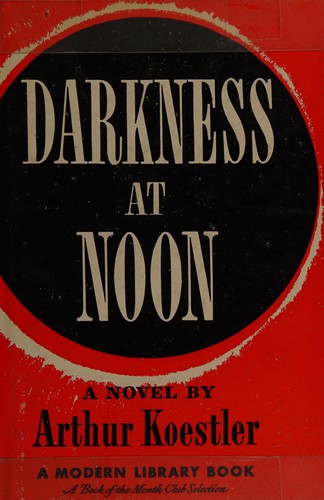
Björn recenserade Darkness at Noon av Arthur Koestler
None
3 stjärnor
Essentially Dostoevsky's Grand Inquisitor parable set during Stalin's purges and stretched to 250 pages, Darkness And Noon is obviously dated but not not outdated in the way it circles the question of Greater Good, the worth of one life vs the worth of a thousand, the question of just what an idea is worth, etc. The irony: A revolution based on an idea of progress inevitably (?) becomes a (literally rather than politically) conservative regime dedicated to continuing refining the idea and fighting against any notion of changing it. (Makes me wonder about the strengths and weaknesses of liberal democracy vs any of its challengers - how do you sell an idea that's just about what you do now as a contender to an idea that promises either utopia or apocalypse in the future? Is the problem of liberalism that it lacks the endgame that Lenin, Hitler, Jesus or …
Essentially Dostoevsky's Grand Inquisitor parable set during Stalin's purges and stretched to 250 pages, Darkness And Noon is obviously dated but not not outdated in the way it circles the question of Greater Good, the worth of one life vs the worth of a thousand, the question of just what an idea is worth, etc. The irony: A revolution based on an idea of progress inevitably (?) becomes a (literally rather than politically) conservative regime dedicated to continuing refining the idea and fighting against any notion of changing it. (Makes me wonder about the strengths and weaknesses of liberal democracy vs any of its challengers - how do you sell an idea that's just about what you do now as a contender to an idea that promises either utopia or apocalypse in the future? Is the problem of liberalism that it lacks the endgame that Lenin, Hitler, Jesus or Mohammed can offer? Were the political ideologies of the short 20th century just secularized escatology?)
At the same time, as a novel, it tends to get very longwinded. What makes an interesting philosophical argument can also make for a fairly dry novel, as Koestler's small cast of characters walk around in their cells contemplating political theory. Any boredom is saved by the last paragraph, though, which is glorious.