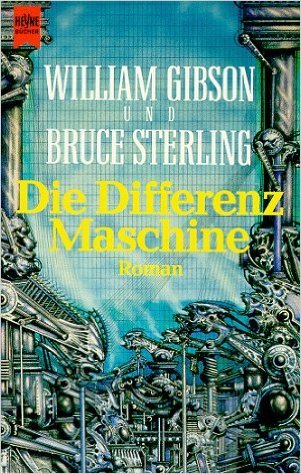
Björn recenserade The Difference Engine av Bruce Sterling
None
3 stjärnor
On the one hand, the world-building part of it is excellent and even believable (at least in an "i buy it as fiction" way). Computers happen to be invented 100 years earlier so that the industrial revolution and the information revolution coincide; now you have Victorians in 1850s London trying to make sense of a world where hackers (or rather "clackers", given that nobody's invented plastic, magnetic tape or transistors yet) control the information...
"But that's theft!"
" 'Borrowing,' according to him. Says he'll give me back my cards, as soon as he's had 'em copied. That way I don't lose nothin', you see?"
Sybil felt dazed. Was he teasing her? "But isn't that stealing, somehow?"
"Try arguing that with Samuel bloody Houston! He stole a whole damn country once, stole it clean and picked it to the bone!"
...where the United States quickly fell apart into several warring nations …
On the one hand, the world-building part of it is excellent and even believable (at least in an "i buy it as fiction" way). Computers happen to be invented 100 years earlier so that the industrial revolution and the information revolution coincide; now you have Victorians in 1850s London trying to make sense of a world where hackers (or rather "clackers", given that nobody's invented plastic, magnetic tape or transistors yet) control the information...
"But that's theft!"
" 'Borrowing,' according to him. Says he'll give me back my cards, as soon as he's had 'em copied. That way I don't lose nothin', you see?"
Sybil felt dazed. Was he teasing her? "But isn't that stealing, somehow?"
"Try arguing that with Samuel bloody Houston! He stole a whole damn country once, stole it clean and picked it to the bone!"
...where the United States quickly fell apart into several warring nations thanks to the UK's automated intelligence service, where rationalism has taken over completely (Lord Babbage, Lord Darwin, etc - Disraeli is just a hack writer) and the Luddites have become not only enemies of the state but outright terrorists - thoughtcrime, du-du-du-dudu-du. And they write it all like a saucier Englisher Jule Verne novel, complete with mustache-twirling villains and upright gentleman "heroes" saying things like
"Some folk pass their very lives in the mud of the Thames."
"Who's that then?" asked Tom.
"Mudlarks," Fraser told him, picking his way. "Winter and summer, they slog up to their middles, in the mud o' low tide. Hunting lumps o' coal, rusty nails, any river-rubbish that will fetch a penny."
"Are you joking?" Tom asked.
"Children mostly," Fraser persisted calmly, "and a deal of feeble old women."
"I don't believe you," Brian said. "If you told me Bombay or Calcutta, I might grant it. But not London!"
"I didn't say the wretches were British," Fraser said. "Your mudlarks are foreigners, mostly. Poor refugees."
"Well, then," Tom said, relieved.
...so that you have to keep your eyes open to notice that it's actually women doing most of the heavy lifting in the novel, with Ada Lovelace the original clacker, despite still being thought of as lesser creatures. It's two paradigm shifts at once. Or probably more than that.
Unfortunately, the plot is convoluted to say the least (or possibly just badly thought out). It's told in several interlocking storylines that don't really interlock, that don't really feel like they get resolved. Plus, with most of the characters being rather stuck-up unlikable fools in a lot of ways, it's difficult to find one to latch on to - especially since they tend to get written out for a few hundred pages. It's entertaining as hell up to a point, but when everything just drags on, I start to lose interest.
Fascinating effort though, and I'll never not like the idea of steampunk. I might have to go back to this one at some point.