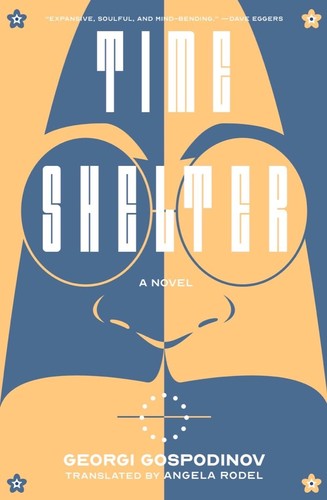

enne📚 recenserade Time Shelter - a Novel av Georgi Gospodinov
Time Shelter
3 stjärnor
Time Shelter was our #SFFBookClub October 2025 pick.
I have such mixed feelings about this book. Thematically and topically, it manages to be quite consistent, but it felt like there were too many ingredients in the soup. It feels like there could have been a much tighter and less rambling story or two (or three) assembled from the various pieces of this novel, but then it wouldn't have been this book, either.
There's a lot that I enjoyed about this book, in terms of its discussions about the weaponization and productionization of nostalgia and the past. But also the way that we produce and manufacture memory as well, in similar fashion. I liked the parallels of the national and personal with respect to the uncertainty of the future and wanting to dwell safely in the past. The slow collapse of the narrator during the final chapters.
Despite …
Time Shelter was our #SFFBookClub October 2025 pick.
I have such mixed feelings about this book. Thematically and topically, it manages to be quite consistent, but it felt like there were too many ingredients in the soup. It feels like there could have been a much tighter and less rambling story or two (or three) assembled from the various pieces of this novel, but then it wouldn't have been this book, either.
There's a lot that I enjoyed about this book, in terms of its discussions about the weaponization and productionization of nostalgia and the past. But also the way that we produce and manufacture memory as well, in similar fashion. I liked the parallels of the national and personal with respect to the uncertainty of the future and wanting to dwell safely in the past. The slow collapse of the narrator during the final chapters.
Despite that, I also struggle with "was this a good story" or "did I enjoy reading this". Probably not, if I'm being honest. I was gripped the most by the personal narrative and the narrator's relationship with his imagined collaborator/self Gaustine, but the story took so many tangents that I'm not sure that any of its threads came together for me satisfyingly.
(Truly also, I have been struggling with reading this month, and a book that challenged me so much as a reader is likely not the best fit for my current capacity. I feel like there is probably more here that I was unable to connect or fully grasp.)