Ocaña recenserade Babel: La necesidad de la violencia. av R.F. Kuang
Maravilloso - Marvelous
5 stjärnor
Bufff, tremendo libro acabo de terminar. Haceros un favor y leeros Babel.
Lo mejor que he leído este año. Necesito procesarlo.
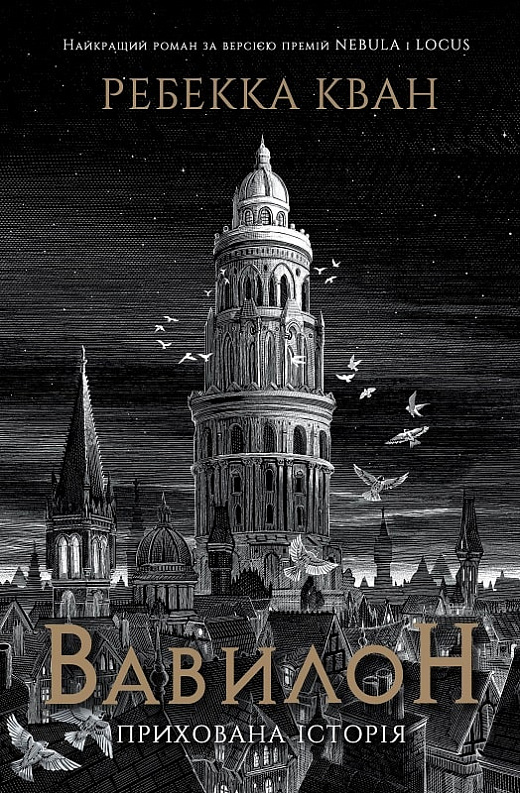
Inbunden, 587 sidor
På Ukrainian
Publicerades 30 september 2023 av Жорж.
Історичне епічне фентезі про студентські революції, колоніальний спротив та використання мови й перекладу як інструмента домінування імперії.
1828 рік. Робіна Свіфта, осиротілого через спалах холери в Кантоні, забирає в Лондон загадковий професор Ловелл. Там Робін роками навчається латини, давньогрецької та китайської, готуючись одного дня вступити до престижного Королівського інституту перекладу Оксфордського університету, також відомого як Вавилон. Вежа та її студенти — це світовий центр перекладу, і, що важливіше, магії. Сріблярство — мистецтво проявлення значеннєвих втрат у перекладі за допомогою срібних зливків. Саме завдяки сріблярству британці здобули нечувану силу, бо ж таємне ремесло допомагає імперії в колоніальних прагненнях. Для Робіна Оксфорд — це утопія, присвячена пошуку знання. Але знання кориться владі, і як китайський хлопчик, що виріс у Британії, він розуміє, що служити Вавилону означає зрадити свою батьківщину. Після початку навчання Робін опиняється між Вавилоном і таємним товариством «Гермес» — організацією, що прагне зупинити розширення імперії. Коли Британія задумує почати …
Історичне епічне фентезі про студентські революції, колоніальний спротив та використання мови й перекладу як інструмента домінування імперії.
1828 рік. Робіна Свіфта, осиротілого через спалах холери в Кантоні, забирає в Лондон загадковий професор Ловелл. Там Робін роками навчається латини, давньогрецької та китайської, готуючись одного дня вступити до престижного Королівського інституту перекладу Оксфордського університету, також відомого як Вавилон. Вежа та її студенти — це світовий центр перекладу, і, що важливіше, магії. Сріблярство — мистецтво проявлення значеннєвих втрат у перекладі за допомогою срібних зливків. Саме завдяки сріблярству британці здобули нечувану силу, бо ж таємне ремесло допомагає імперії в колоніальних прагненнях. Для Робіна Оксфорд — це утопія, присвячена пошуку знання. Але знання кориться владі, і як китайський хлопчик, що виріс у Британії, він розуміє, що служити Вавилону означає зрадити свою батьківщину. Після початку навчання Робін опиняється між Вавилоном і таємним товариством «Гермес» — організацією, що прагне зупинити розширення імперії. Коли Британія задумує почати несправедливу війну з Китаєм через срібло та опіум, Робіну доведеться зробити вибір.
Bufff, tremendo libro acabo de terminar. Haceros un favor y leeros Babel.
Lo mejor que he leído este año. Necesito procesarlo.
Not my usual but I’m glad I checked it out. The alternate history was interesting and the protagonist’s viewpoint was enlightening. Overall a good read.
Me ha gustado mucho. Creo que es una historia juvenil que te sumerge de manera muy adecuada en los tentáculos del colonialismo, de cómo la ceguera en lo evidente maneja nuestro día a día y las justificaciones más burdas acaban saliendo a la luz por le miedo al enfrentamiento. No obstante, he de decir que me ha faltado que los personajes estén mejor construidos, que lleguemos a conocerlos mejor. Parece que lo único que guía su existencia, más allá del protagonista, es su relación con este. Por eso no le pongo las cinco estrellas.
Me ha gustado mucho. Creo que es una historia juvenil que te sumerge de manera muy adecuada en los tentáculos del colonialismo, de cómo la ceguera en lo evidente maneja nuestro día a día y las justificaciones más burdas acaban saliendo a la luz por le miedo al enfrentamiento. No obstante, he de decir que me ha faltado que los personajes estén mejor construidos, que lleguemos a conocerlos mejor. Parece que lo único que guía su existencia, más allá del protagonista, es su relación con este. Por eso no le pongo las cinco estrellas.
XIX. mendearen hasieran txinatar gazte bat umezurtz geratzen da eta babesle misteriotsu batek Ingalaterrara eramaten du, inperioaren bihotzera. Inperio hori gure mundukoaren antzekoa da, baina fantasia puntu batekin.
Zehaztuko ez dizkizuedan arrazoiengatik hizkuntzalaritzak garrantzi handia du liburuan eta agertzen den magia sistema oso erakargarria iruditu zait.
Inperialismo britainiarraren kritika zorrotza egiten du Rebecca F. Kuang-ek liburukote honetan. Ia 550 orri dituen arren ondo eusten dio istorioaren tentsioari. Idazlearen beste lan batzuek ere itxura bikaina dute, esaterako "Opioaren gerra" trilogiak. eu.wikipedia.org/wiki/Rebecca_F._Kuang
XIX. mendearen hasieran txinatar gazte bat umezurtz geratzen da eta babesle misteriotsu batek Ingalaterrara eramaten du, inperioaren bihotzera. Inperio hori gure mundukoaren antzekoa da, baina fantasia puntu batekin.
Zehaztuko ez dizkizuedan arrazoiengatik hizkuntzalaritzak garrantzi handia du liburuan eta agertzen den magia sistema oso erakargarria iruditu zait.
Inperialismo britainiarraren kritika zorrotza egiten du Rebecca F. Kuang-ek liburukote honetan. Ia 550 orri dituen arren ondo eusten dio istorioaren tentsioari. Idazlearen beste lan batzuek ere itxura bikaina dute, esaterako "Opioaren gerra" trilogiak. eu.wikipedia.org/wiki/Rebecca_F._Kuang
A truly amazing book. The voice is powerful, the vibe immaculate. I hate to compare a wonderful work of fantasy to Harry Potter, but it scratches an itch to have a British magical school story that is so well written. Also of note is the way she writes the main characters friendships, it is the most wholesome display of platonic devotion I've ever read. Between that and her descriptions of life on campus I feel like I lived the life of an academic, and experienced things second hand that I've never gotten the chance to before.
A truly amazing book. The voice is powerful, the vibe immaculate. I hate to compare a wonderful work of fantasy to Harry Potter, but it scratches an itch to have a British magical school story that is so well written. Also of note is the way she writes the main characters friendships, it is the most wholesome display of platonic devotion I've ever read. Between that and her descriptions of life on campus I feel like I lived the life of an academic, and experienced things second hand that I've never gotten the chance to before.
Fantastic from beginning to end. While it is a work of fiction, the parallels to fact and history are powerful.
The book's synopsis did not pique my interest, but I was quickly lost in the story. Just an amazing read.
Fantastic from beginning to end. While it is a work of fiction, the parallels to fact and history are powerful.
The book's synopsis did not pique my interest, but I was quickly lost in the story. Just an amazing read.
3.5, or thereabouts. There's a lot I really love about this; the setup, the main theme, the idea of language magic, the way it sets up the dreaming spires and magic school only to cheerfully tear it apart, the clip it starts moving at once it gets going...
But damn, Kuang doesn't half run her theme into the ground, does she? Of 545 pages I'm pretty sure fully half are characters discussing colonialism, and I love that they do, and I love that it's the central conflict, but there is such a thing as overegging. Especially since it starts sounding a little too much like a 21st century textbook rather than an 1830s period piece.
Also, for a story with so little changed - or maybe exactly because it's a story with so little changed - I kind of wish she'd explored that one change more. Give me more …
3.5, or thereabouts. There's a lot I really love about this; the setup, the main theme, the idea of language magic, the way it sets up the dreaming spires and magic school only to cheerfully tear it apart, the clip it starts moving at once it gets going...
But damn, Kuang doesn't half run her theme into the ground, does she? Of 545 pages I'm pretty sure fully half are characters discussing colonialism, and I love that they do, and I love that it's the central conflict, but there is such a thing as overegging. Especially since it starts sounding a little too much like a 21st century textbook rather than an 1830s period piece.
Also, for a story with so little changed - or maybe exactly because it's a story with so little changed - I kind of wish she'd explored that one change more. Give me more etymolagic, use it for more than just spells; if you want to do The Secret History, then do The Secret History.
Still, yeah. It manages that trick where it makes me want to overlook its flaws, and that goes a long way. It's memorable, just not only for the best reasons.
Kuang's story surprises. This coming-of-age (and coming-of-revolution) story introduces us to a world where the the 19th-century Industrial Revolution is made possible not by steam and worker oppression but by the magical powers of translation and colonial exploitation. The experiences of the protagonist, a Cantonese boy that adopts the English name Robin Swift, lead us to an imagined Oxford that is as intriguing as Hogwarts but that has sins that Kuang not only does not whitewash, but makes the centerpiece of her novel. The historical notes and especially the etymological explanations are fascinating, if occasionally pedantic. Once you get your head around this world and how it works, you'll want to hang on to the end to see how a postcolonial critique during the height of the British Empire can possibly turn out.
Kuang's story surprises. This coming-of-age (and coming-of-revolution) story introduces us to a world where the the 19th-century Industrial Revolution is made possible not by steam and worker oppression but by the magical powers of translation and colonial exploitation. The experiences of the protagonist, a Cantonese boy that adopts the English name Robin Swift, lead us to an imagined Oxford that is as intriguing as Hogwarts but that has sins that Kuang not only does not whitewash, but makes the centerpiece of her novel. The historical notes and especially the etymological explanations are fascinating, if occasionally pedantic. Once you get your head around this world and how it works, you'll want to hang on to the end to see how a postcolonial critique during the height of the British Empire can possibly turn out.