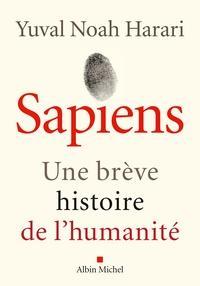
Il y a 100 000 ans, la Terre était habitée par au moins six espèces différentes d'hominidés. Une seule a survécu. Nous, les Homo Sapiens. Comment notre espèce a-t-elle réussi à dominer la planète ? Pourquoi nos ancêtres ont-ils uni leurs forces pour créer villes et royaumes ? Comment en sommes-nous arrivés à créer les concepts de religion, de nation, de droits de l'homme ? A dépendre de l'argent, des livres et des lois ? A devenir esclaves de la bureaucratie, des horaires, de la consommation de masse ? Et à quoi ressemblera notre monde dans le millénaire à venir ?
Véritable phénomène d'édition, traduit dans une trentaine de langues, Sapiens est un livre audacieux, érudit et provocateur. Professeur d'Histoire à l'Université hébraïque de Jérusalem, Yuval Noah Harari mêle l'Histoire à la Science pour remettre en cause tout ce que nous pensions savoir sur l'humanité : nos pensées, nos …
Il y a 100 000 ans, la Terre était habitée par au moins six espèces différentes d'hominidés. Une seule a survécu. Nous, les Homo Sapiens. Comment notre espèce a-t-elle réussi à dominer la planète ? Pourquoi nos ancêtres ont-ils uni leurs forces pour créer villes et royaumes ? Comment en sommes-nous arrivés à créer les concepts de religion, de nation, de droits de l'homme ? A dépendre de l'argent, des livres et des lois ? A devenir esclaves de la bureaucratie, des horaires, de la consommation de masse ? Et à quoi ressemblera notre monde dans le millénaire à venir ?
Véritable phénomène d'édition, traduit dans une trentaine de langues, Sapiens est un livre audacieux, érudit et provocateur. Professeur d'Histoire à l'Université hébraïque de Jérusalem, Yuval Noah Harari mêle l'Histoire à la Science pour remettre en cause tout ce que nous pensions savoir sur l'humanité : nos pensées, nos actes, notre héritage... et notre futur.
This book should be mandatory reading. It explains many things in a simple way and reads like a thriller, despite being a history book. It just makes sense. So do yourself a favour and read it. now.
It bugs me how much I end up disliking this book. Initially it's brilliant, taking the history of humanity and flipping it to present Homo Sapiens Sapiens as, if not nothing but, then certainly to a large extent a carrier of memes, myths, genes, and even other species. The idea that we didn't consciously decide to settle down and eat grass for all time but that wheat essentially hijacked us to spread across the globe is an intriguing one, and he takes a long-term view of human history that certainly casts ideas about free will etc into a much dimmer light. It feels a lot like a companion piece to Lasse Berg's Dawn Over The Kalahari and its sequels, which I loved.
But then... he just gets lost. The trouble with a view like this is that he takes it as licence (there's human nature for ya) to apply it …
It bugs me how much I end up disliking this book. Initially it's brilliant, taking the history of humanity and flipping it to present Homo Sapiens Sapiens as, if not nothing but, then certainly to a large extent a carrier of memes, myths, genes, and even other species. The idea that we didn't consciously decide to settle down and eat grass for all time but that wheat essentially hijacked us to spread across the globe is an intriguing one, and he takes a long-term view of human history that certainly casts ideas about free will etc into a much dimmer light. It feels a lot like a companion piece to Lasse Berg's Dawn Over The Kalahari and its sequels, which I loved.
But then... he just gets lost. The trouble with a view like this is that he takes it as licence (there's human nature for ya) to apply it to everything, and the latter two thirds of the book basically feel like you're sitting in the back seat of a very talkative cab driver who's Figured It All Out and needs to tell you about it. Blah blah hunter-gatherers, blah blah capitalism, blah blah human rights is a sham, blah blah blah. He makes some interesting points, and I kinda like the irony that a book that starts out trying to say something about Homo Sapiens as a whole ends up saying at least as much about Yuval Harari in particular, but damn this book became a chore quickly.