Matthew recenserade The Man Who Was Thursday av G. K. Chesterton
Surreal, thoughtful, hilarious.
5 stjärnor
“The whole gave him a sensation, the vividness of which he could not explain, that Nature was always making quite mysterious jokes.”
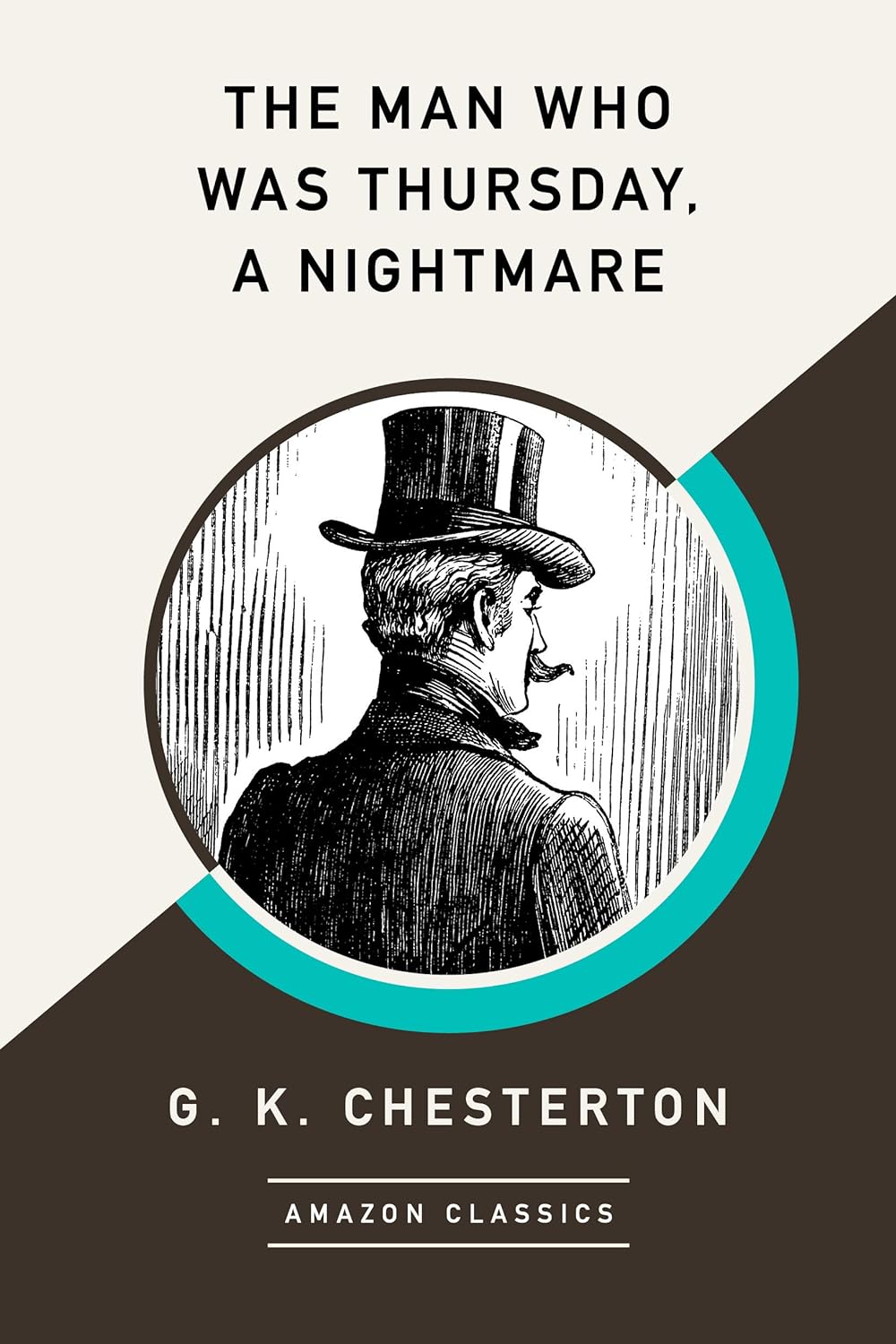
E-bok, 172 sidor
På en
Publicerades 2019
Poet Gabriel Syme believes in the beauty of order and, as such, is recruited by Scotland Yard to an anti-anarchist police corp. While undercover, Syme meets fellow poet Lucian Gregory, a verse writer devoted to disorder, who introduces him to London’s anarchist underworld. Just as Gregory is to be elected to the central council, Syme’s cover is revealed and he is forced to make a decision that sends the cabal into chaos. Is anyone in this underground faction who or what they seem? Syme suddenly realizes he doesn’t have all the answers.
G. K. Chesterton’s masterpiece unfolds itself as a marvel of disguises: political parable, detective novel, Edwardian gothic, spy thriller, and metaphysical mystery—a byzantine maze of deception and subterfuge that surprises to this day.
“The whole gave him a sensation, the vividness of which he could not explain, that Nature was always making quite mysterious jokes.”
Denne boka dukka opp på ei liste over klassikere, men var den eneste på lista jeg ikke en gang hadde hørt om. Så jeg kasta meg inn i den uten å lese meg noe opp først. Boka er en slags thriller, men den er tidvis absurd, satirisk og leker en del med språket. Derfor ble jeg umiddelbart minna om Douglas Adams, Terry Pratchett og den typen britisk litteratur. Plottet kunne vært en episode av The Prisoner: En poet blir verva inn i en (anti-)intellektuell politistyrke som skal avdekke en anarkistkonspirasjon. Men så baller det på seg i alle retninger. Slik sett var det ei overraskende bok å finne på en klassikerliste, men fornøyelig å lese fra ende til annen (selv om den noe allegoriske slutten ikke var så spennende).
Denne boka dukka opp på ei liste over klassikere, men var den eneste på lista jeg ikke en gang hadde hørt om. Så jeg kasta meg inn i den uten å lese meg noe opp først. Boka er en slags thriller, men den er tidvis absurd, satirisk og leker en del med språket. Derfor ble jeg umiddelbart minna om Douglas Adams, Terry Pratchett og den typen britisk litteratur. Plottet kunne vært en episode av The Prisoner: En poet blir verva inn i en (anti-)intellektuell politistyrke som skal avdekke en anarkistkonspirasjon. Men så baller det på seg i alle retninger. Slik sett var det ei overraskende bok å finne på en klassikerliste, men fornøyelig å lese fra ende til annen (selv om den noe allegoriske slutten ikke var så spennende).
I wasn't all that impressed with the book, though I didn't really dislike it either. I started reading with absolutely no idea of what the book was about (Gutenberg.org editions don't really have blurbs on the back cover). At first I thought it was a sendup of revolutionary thought similar to Dostoyevsky's Demons, then I thought it was a sendup of revolutionary acts similar to Bulgakov's The Master And Margarita, then it descended into proto-James Bond, and by the end I wasn't sure what the hell it was.
At its heart, I guess it's more of a philosophical thriller than a political one - the hunt for an anarchist parading as the hunt for meaning, ref Nietzsche's infamous talk of killing God etc - and there are definitely some interesting discussions, even if all the characters seem so foolish that I'm not sure whether we're supposed to take anything they …
I wasn't all that impressed with the book, though I didn't really dislike it either. I started reading with absolutely no idea of what the book was about (Gutenberg.org editions don't really have blurbs on the back cover). At first I thought it was a sendup of revolutionary thought similar to Dostoyevsky's Demons, then I thought it was a sendup of revolutionary acts similar to Bulgakov's The Master And Margarita, then it descended into proto-James Bond, and by the end I wasn't sure what the hell it was.
At its heart, I guess it's more of a philosophical thriller than a political one - the hunt for an anarchist parading as the hunt for meaning, ref Nietzsche's infamous talk of killing God etc - and there are definitely some interesting discussions, even if all the characters seem so foolish that I'm not sure whether we're supposed to take anything they say seriously. Not to mention whether Chesterton even bothered understanding the reasons behind socialism or anarchism (probably not since they're more nihilists than anarchists); at least Dostoevsky seemed to admit they had legitimate complaints even as he skewered them. Then again, Chesterton's novel obviously isn't meant to be a realistic image of turn-of-the-century politics, so that didn't bother me too much.
It is very funny at times. The duel scene, the chase through London, the first few reveals of the Council members (before we realise where it's all headed), etc - Chesterton's language is (for the most part) a joy to read, his dialogue snaps and his characters do what they can in the midst of all the craziness.
"The work of the philosophical policeman," replied the man in blue, "is at once bolder and more subtle than that of the ordinary detective. The ordinary detective goes to pot-houses to arrest thieves; we go to artistic tea-parties to detect pessimists. The ordinary detective discovers from a ledger or a diary that a crime has been committed. We discover from a book of sonnets that a crime will be committed...We were only just in time to prevent the assassination at Hartlepool, and that was entirely due to the fact that our Mr. Wilks (a smart young fellow) thoroughly understood a triolet."
Who are the brain police, eh? The plot, however, I found predictable and the reveal at the end overly preachy. "HA! Silly humans, you cannot fathom the nature of God!" OK, if that's your thing, sure. But then, doesn't that essentially say that they were naive to ever try? The moral seems to be "Sit back, don't worry your pretty little heads about it, and trust that it'll all work out." Which bugs me a bit; whether in politics or philosophy, I'm not sure Chesterton understood the arguments he seems to try to refute.
As a farce, it's a lot of fun. As a thriller, it's nicely paced but predictable. As a philosophical work, it's flawed. But it made me laugh, both with it and at it.