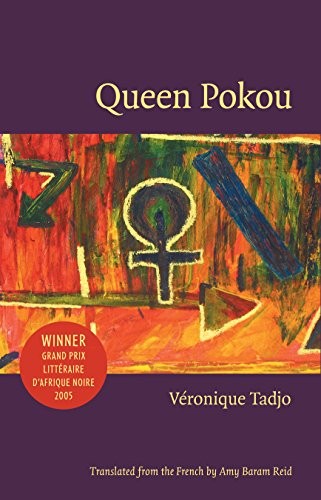
Björn recenserade Queen Pokou av Véronique Tadjo
None
4 stjärnor
The story so far:
In the early 18th century - this must be far back enough to at least semi-qualify as "myth" in official Western history, since wikipedia says that the history of Cote d'Ivoire is "virtually unknown" before 1893 - the country was torn apart by civil war after a dispute over the throne. After having her entire family murdered, Queen Pokuaa or Pokou led her people to a new country, in the process sacrificing her newborn son to the gods so that they might cross a river and escape the soldiers chasing them down. She threw the child in the river, the river parted before them, and the new kingdom was named Baoulé after her cry: "The child is dead!"
And if that story wasn't already familiar-sounding enough, Tadjo transliterates her first name as Abraha.
Reine Pokou: Concerto Pour Un Sacrifice (Queen Pokou: Concerto for a Sacrifice) is …
The story so far:
In the early 18th century - this must be far back enough to at least semi-qualify as "myth" in official Western history, since wikipedia says that the history of Cote d'Ivoire is "virtually unknown" before 1893 - the country was torn apart by civil war after a dispute over the throne. After having her entire family murdered, Queen Pokuaa or Pokou led her people to a new country, in the process sacrificing her newborn son to the gods so that they might cross a river and escape the soldiers chasing them down. She threw the child in the river, the river parted before them, and the new kingdom was named Baoulé after her cry: "The child is dead!"
And if that story wasn't already familiar-sounding enough, Tadjo transliterates her first name as Abraha.
Reine Pokou: Concerto Pour Un Sacrifice (Queen Pokou: Concerto for a Sacrifice) is a remarkable little 90-page novella. Tadjo starts off by telling the above story in detail over the first 30 pages, giving us the main theme, as it were. Then she picks up her metaphorical tenor sax and starts playing different variations on it; what if, what if, what if? Does it make a difference how everything happened, why it happened, and what happened afterwards? What if the queen went insane from grief? What if the queen said "fuck it" to her people and tried to save her son? What if she refused the sacrifice and stayed to fight? What if they were captured and shipped off to America as slaves? What if they settled in their new home and tried to build a new culture based on the death of an innocent child? Etc etc etc. Change a detail and the entire story takes on a new meaning, from fairytale to all too realistic misery; change every detail and the basic story - a parent sends their only child into death for the sake of an uncertain future - still remains.
The parallels to child soldiers and the wars and political unrest that have torn across Africa are obvious, yet never heavy-handed. In Reine Pokou, Tadjo spins a tale that sketches out both the reasons and the results of the situation, and how interpretations of a foundation myth can make all the difference to who we think we are and should be. And her light touch and poetic language, and the suggestions that things could go differently, only makes it more brutal.
Fact-based fiction as a subjunctive clause.